
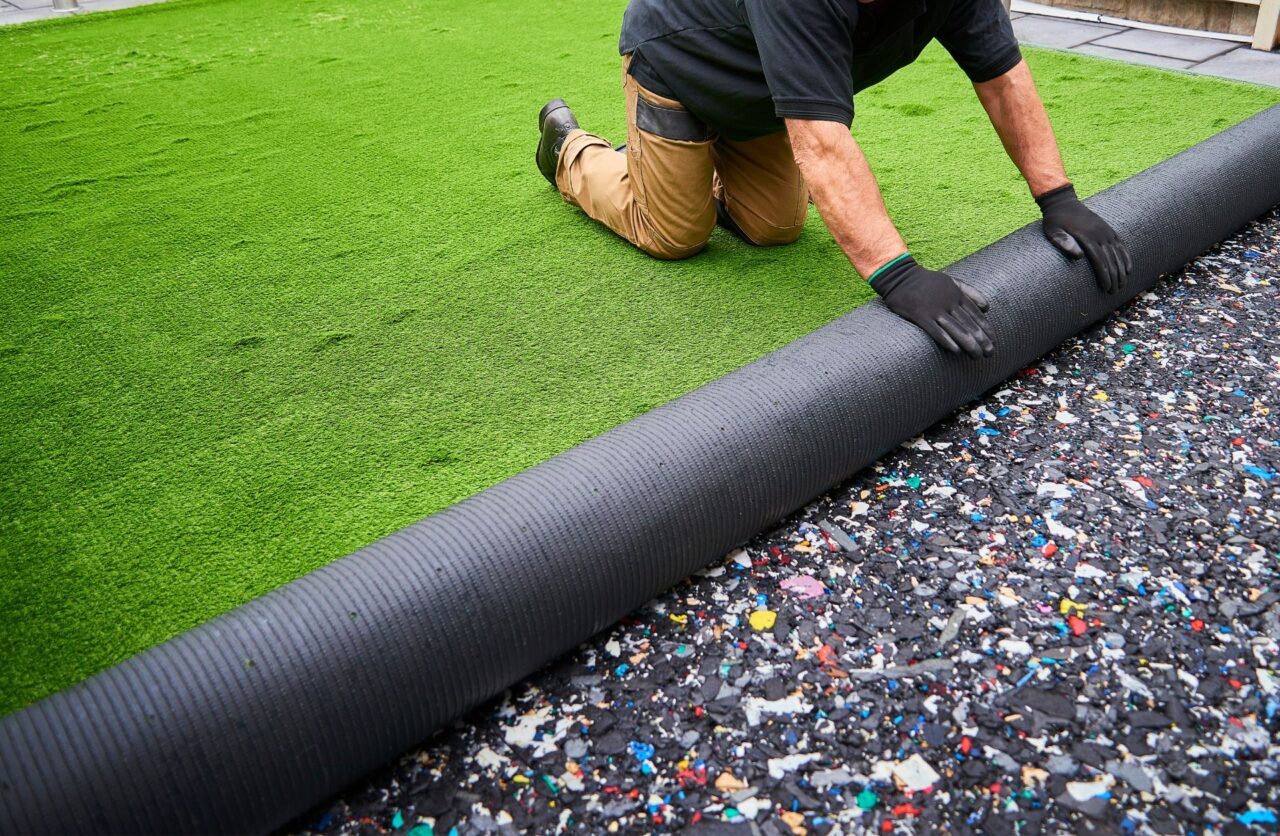
Good artificial grass drainage in Whitby starts long before the turf goes down. It starts with the base. Much of Durham Region sits on heavy clay-loam soil that drains slowly, so the layers built underneath the grass are what decide whether your lawn stays dry or holds puddles after every storm. Get the base right and artificial grass drains beautifully through Ontario's wettest weeks. Get it wrong and no amount of premium turf will fix a soggy yard. Here is how proper base prep works on Whitby's soil and lots.
Why Durham Region soil makes base prep matter
Whitby and its neighbours sit largely on the clay plains that run across Durham Region. Clay-loam soil is dense and slow to absorb water, which is great for holding nutrients but poor for drainage. Low-lying properties near Lynde Creek, Pringle Creek and the Lake Ontario shoreline can also sit closer to the water table, so runoff has fewer places to go. On sandy soil, water simply soaks away. On Durham clay it lingers, which is exactly why the aggregate base under artificial turf does the heavy lifting here. The base creates a free-draining reservoir and a path for water to move sideways and off the lot, above the clay that would otherwise trap it.
The base layers, explained
A durable artificial grass base is built in stages, and each one has a job:
- Excavation: the existing lawn or topsoil is dug out, usually to a depth of 75 to 150 millimetres depending on soil and use. On clay, going a little deeper gives water more room to drain.
- Sub-base grading: the exposed ground is shaped to a gentle slope, typically away from the house, so water always has a direction to travel.
- Geotextile fabric: a permeable membrane over the clay stops the aggregate from sinking into the soil and blocks weeds, while still letting water pass.
- Granular base: crushed stone such as granular A is spread in lifts and compacted firm. This is the layer that carries water and gives the turf a stable, level surface.
- Compaction: each lift is compacted with a plate to lock the stone together. Skipping this step is the single most common cause of a base that shifts or dips later.
Our Artificial Grass Whitby crews build the base to suit the soil in front of them rather than a one-size spec, because a shaded clay yard in Otter Creek and a sandy patch near the lake are not the same job.
Drainage options for clay lots
On most Whitby lawns, a well-graded aggregate base plus a permeable turf backing is enough to move water away. On tougher clay lots, or where a yard already ponds, a few extra measures help. A drainage layer of larger clear stone under the granular base adds storage capacity. In severe cases, a perforated pipe or a simple French drain routed to a lower point or a dry well gives trapped water a defined exit. For pet areas that get heavy rinsing, an upgraded permeable backing paired with a free-draining base keeps pet-friendly turf from staying wet.
Grading and slope
Slope is quiet but critical. A fall of even one to two percent across the surface keeps water moving instead of pooling. The grade should always carry water away from the house foundation and toward a garden bed, a drain or the natural low point of the lot. A laser or string line is used to confirm the fall before the turf is laid, since a flat or reverse-sloped base will trap water no matter how good the aggregate is.
Frost heave and freeze-thaw
Durham winters cycle above and below freezing many times, and each cycle can push poorly built ground up and down. That movement, called frost heave, happens when water trapped in the soil freezes and expands. The defence is the same free-draining base that handles rain: if water drains out of the aggregate before it freezes, there is far less to expand. A compacted, well-drained base stays stable across the seasons, while a waterlogged or loosely built one is the kind that ripples or lifts by spring.
Common base mistakes to avoid
- Laying turf straight over clay or old sod without a proper aggregate base.
- Skipping compaction, which leaves the surface to settle unevenly.
- Building a flat base with no slope, so water has nowhere to go.
- Using fine screenings alone, which can hold water on clay instead of draining.
If a low spot ever appears, it is almost always a base issue, not a turf issue. To plan a base that suits your soil and lot, reach out to us for an on-site assessment. We also prepare bases for backyard turf, play areas and putting greens across Whitby.
Frequently Asked Questions
How does artificial grass drain on clay soil?
Water drains through the turf backing into a compacted aggregate base built above the clay, then runs off along a graded slope. On heavy Durham clay the base is the key, since the clay itself sheds water slowly, so a deeper granular layer and proper grading carry the water away.
How deep should the base be for artificial grass in Whitby?
Most residential lawns use roughly 75 to 100 millimetres of compacted granular base, and clay-heavy or high-traffic Durham lots often go deeper. The exact depth depends on your soil, drainage and use, which is why an on-site assessment beats a fixed spec.
Will artificial grass lift from frost heave?
A properly built base resists it. A well-compacted, free-draining aggregate layer lets water escape before it freezes and expands, so the surface stays stable through Durham's freeze-thaw cycles. Poorly compacted or waterlogged bases are the ones that move.
Get a free quote in Whitby
Worried about drainage on a clay lot? Call (289) 367-6204 or contact our team for a free, no-obligation assessment. We will check your slope, soil and drainage and build a base that keeps your Whitby lawn dry.